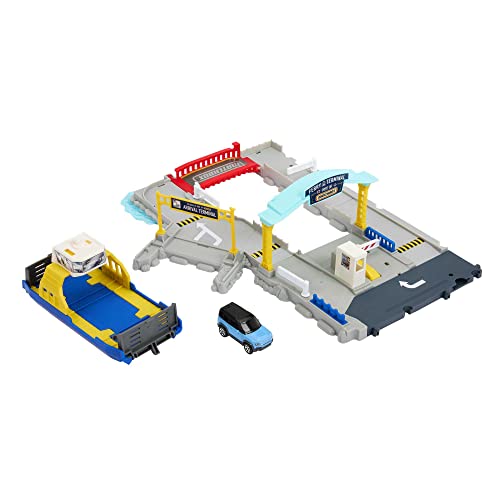
HMH29 Ferry Port Set with Detachable Wheeled Ferry, Elements to Activate Manua
4.8 out of 5 · 492 ratings
1:64
$24.88
Open the slot
Scale is the first thing printed on a Matchbox box and the last thing most people read. It matters more than it looks, because it is the reason a collection of diecast cars holds together on a shelf instead of turning into a pile of unrelated objects.
The number is a ratio. One to sixty-four means sixty-four units of real vehicle become one unit of model. Sixty-four inches of hood becomes one inch of hood. It is not a length, it is a rule for converting one.
Because real cars are different sizes. A 1960s Mini is about ten feet long, so at 1:64 it comes out under two inches. A 1970s American sedan is nearly eighteen feet, which lands past three. Both are built to exactly the same ratio and both are correct, and anybody who expects every model in a case to measure the same has misread what the number says.
This is the most common confusion about diecast, and it goes the other way too. Two models that measure the same are not necessarily the same scale — a 1:43 Mini and a 1:64 pickup can sit almost level.
At 1:64 a car is about three inches of metal, and everything has to survive being shrunk into that. Window glazing becomes a single clear insert rather than separate panes. A wing mirror disappears or becomes a bump. Panel gaps are engraved rather than real. The parts that do survive are the ones worth judging a casting by: the shape of the roofline, the stance over the wheels, and whether the printed graphics line up across a curve.
Paint behaves differently at this size as well. A metallic finish needs a fine flake or it reads as glitter; a flat white or silver body shows every flaw in the tooling, which is why plain colors are the hardest ones to get right and the first place to look when you are comparing two editions of the same model.
The usefulness of a fixed ratio is that marques become comparable. A Toyota pickup, a Honda hatch, a Dodge muscle car, a Nissan coupe and a Formula-style open-wheel racer at 1:64 sit in correct proportion to one another, so a shelf reads like a street rather than a toy box. Put a blue sedan next to a green wagon next to a white van and the sizes tell you something true about the real vehicles.
It also tells you what is missing. Collectors who come to 1:64 from the tuner side look for a Skyline or an RWB widebody and do not find one here — those builds belong to other diecast lines. Matchbox keeps to stock-spec bodies, which is a deliberate limit rather than an oversight.
Two places break the ratio on purpose. Sky Busters aircraft cannot work at 1:64 — a large airliner would be eleven feet long — so planes and helicopters are sized to the hand and the ratio floats from model to model. Large-scale trucks go the other way: fifteen inches and up, built for floor play rather than display, often carrying 1:64 cars as cargo.
There is also a small premium 1:24 range, mostly licensed vehicles, which is roughly three times the linear size of the mainline. If you are buying for a shelf that already has a 1:64 collection on it, check the box before you add one.
Decide what the shelf is for first. A display collection wants one ratio and nothing else — pick 1:64 and stay there. A collection that gets played with can mix freely, because a child does not care that the fire engine is out of scale with the helicopter.
If you are matching a model to a playset, 1:64 is the safe answer: Action Drivers sets are built around it, and a 1:24 car will not fit through an auto shop bay designed for the small ones. Check the listing for what is in stock before you commit to completing a set — an edition that has sold through is not coming back at the original price.
4.8 out of 5 · 492 ratings
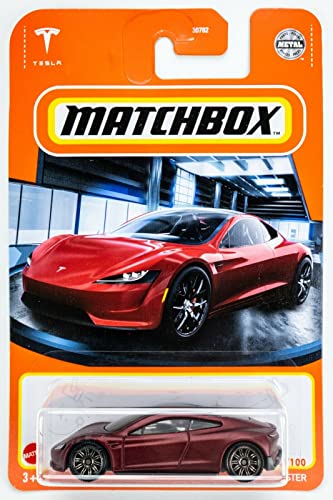
4.7 out of 5 · 199 ratings
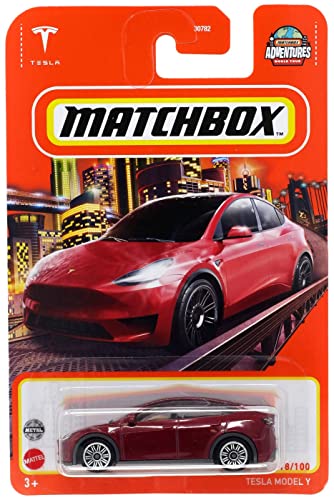
4.7 out of 5 · 178 ratings
4.6 out of 5 · 127 ratings